Vibe sims.
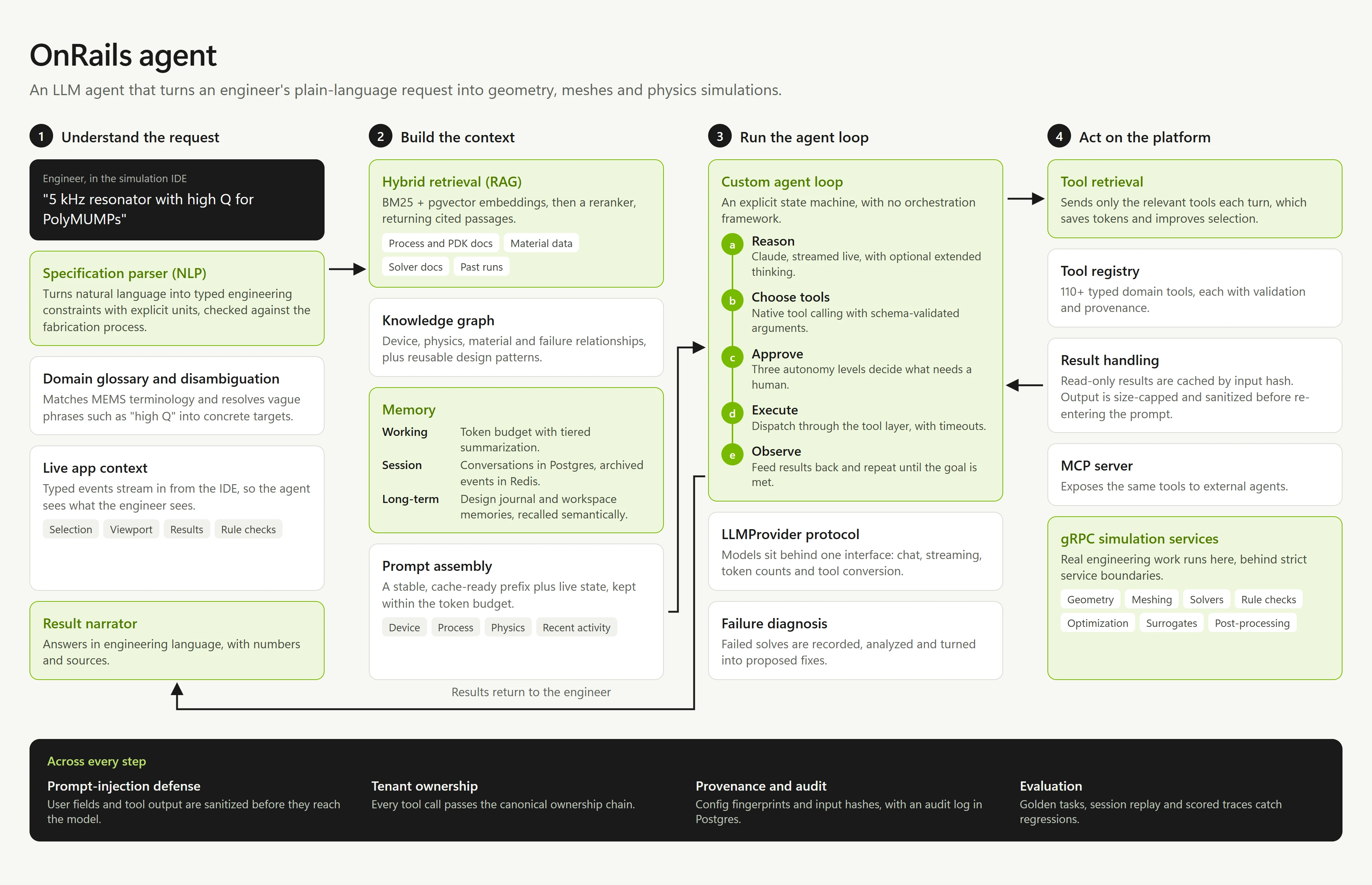
Setting up a physics simulation takes a long chain of expert steps. I’m building the LLM agent that lets an engineer describe what they want, then handles the geometry, meshing and simulation runs, asking for approval where it matters.
110+ typed tools · three autonomy levels · pre-launch
What I worked on
The agent is an explicit state machine with no orchestration framework. It streams its work live, and three autonomy levels decide what needs a human.
For long sessions, a token budget with tiered summarization keeps context under control, backed by an event archive and Postgres persistence. Each turn sends only the relevant tools, read-only results are cached, and tool output is sanitized before it re-enters the prompt.
Natural-language specifications become typed constraints, supported by a domain glossary and a knowledge-graph tool. Failed runs get an automated diagnosis.
The backend is a standalone gRPC service, with REST and WebSocket access through the API gateway. Tool calls into the simulation services have timeouts and tenant ownership checks, with audit logging and provenance on tool calls.
Tools and methods Python · Claude · gRPC · WebSocket · PostgreSQL · Redis